

latest
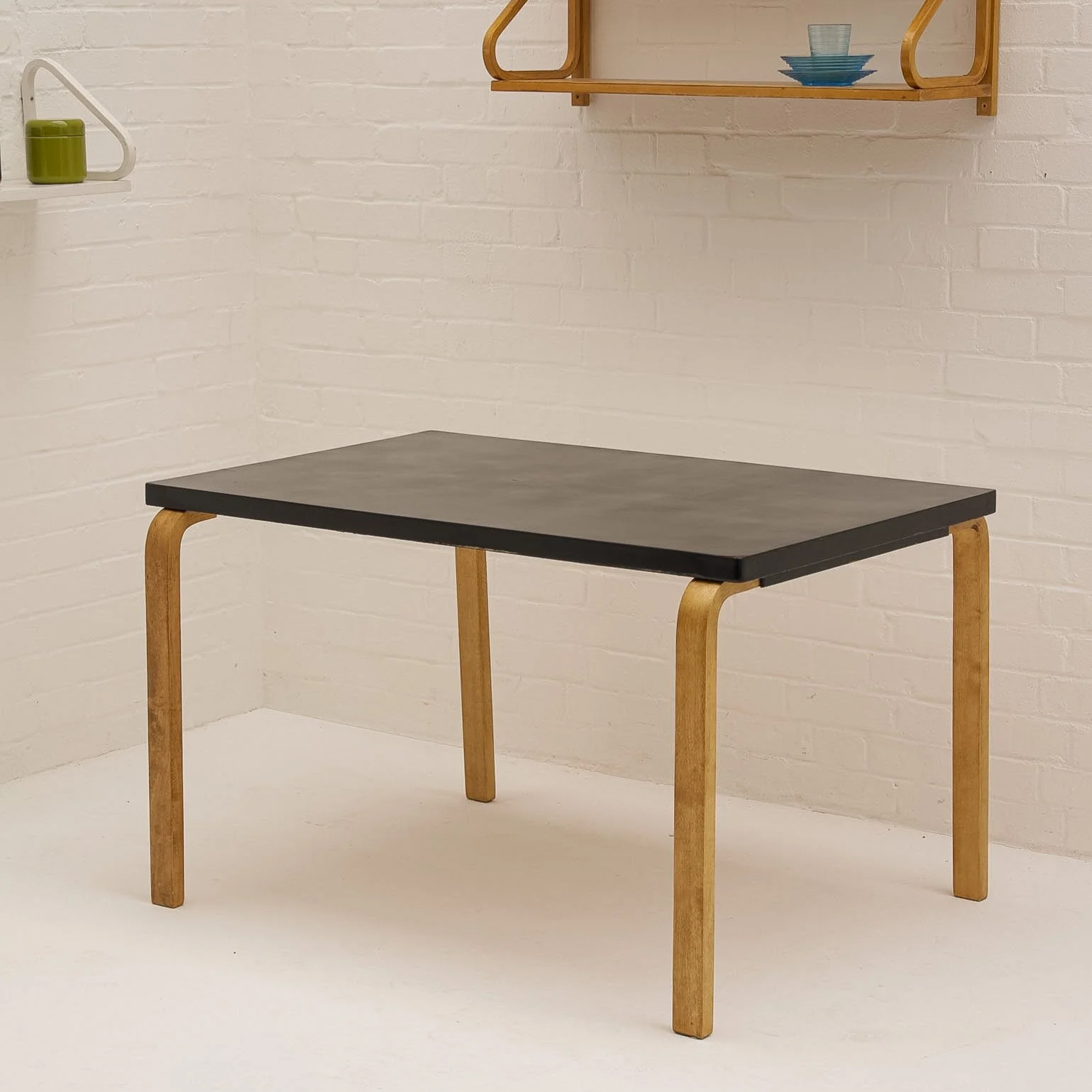
this is a nice early example, featuring an ebonized wood top paired with a birch frame and iconic “l‑leg” construction. in nice condition, the legs have developed a warm patina and it is structurally solid, the top has some wear and marks consistent with age. this includes scratches and haziness, as expected with a table that is nearly 100 years old.
its proportions make it versatile as a dining table or desk.
h 72 w 120 d 75 cm
delivery can be arranged. please get in touch with any questions.
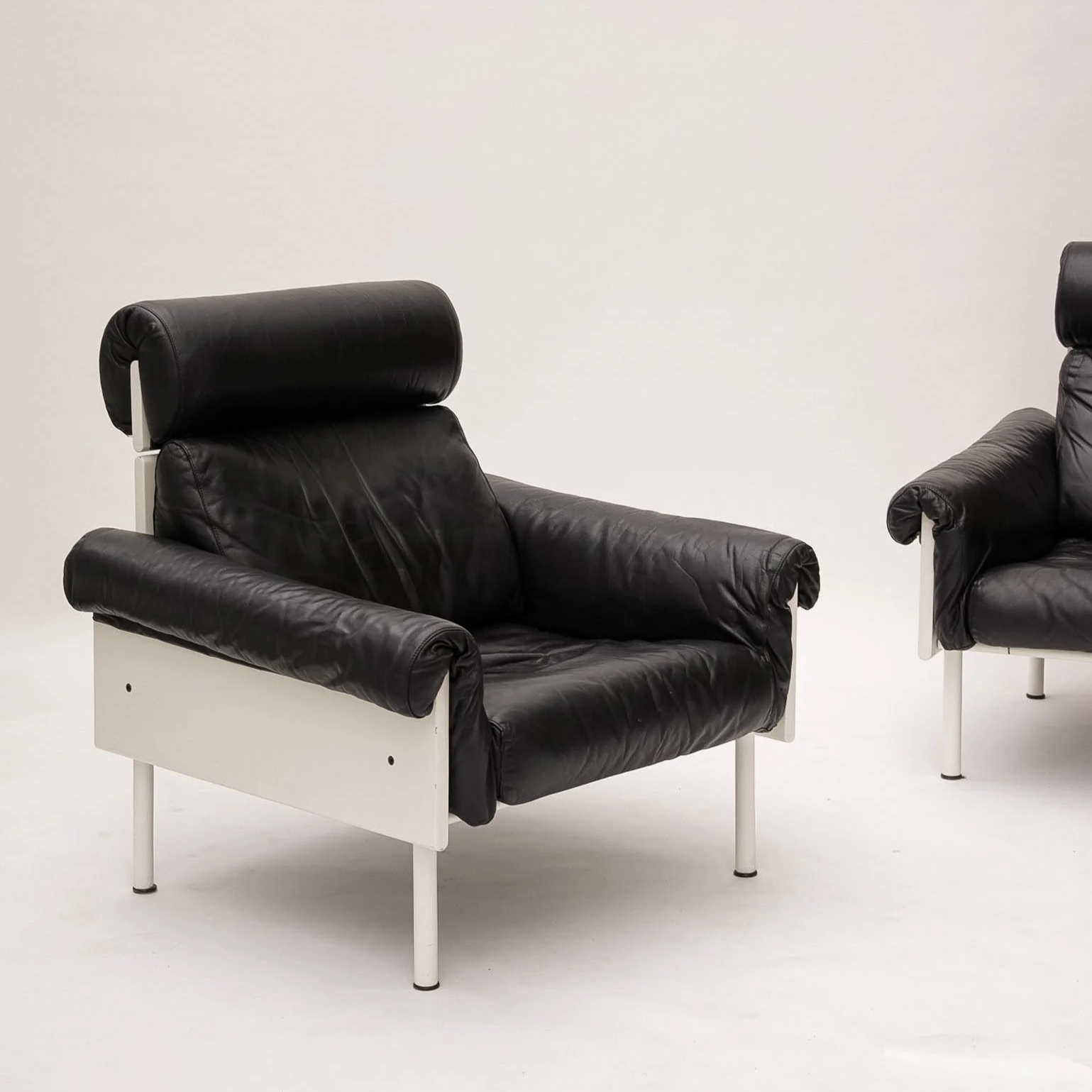
designed by yrjö kukkapuro in the 1960s, the ateljee series became one of his best-known designs and is now held in the collections of both the victoria and albert museum in london and moma in new york.
kukkapuro placed great importance on ergonomics, believing a chair should be as good to sit in as it is to look at. the understated design combines a plywood frame and chrome-plated tubular steel legs with generous leather cushions.
finished in white-painted wood, these examples are in good vintage condition, with some wear consistent with age and use. the detachable headrests attach via chromed metal brackets, providing additional support.
h 70 w 89 d 78 cm
the armchairs can be sold separately.
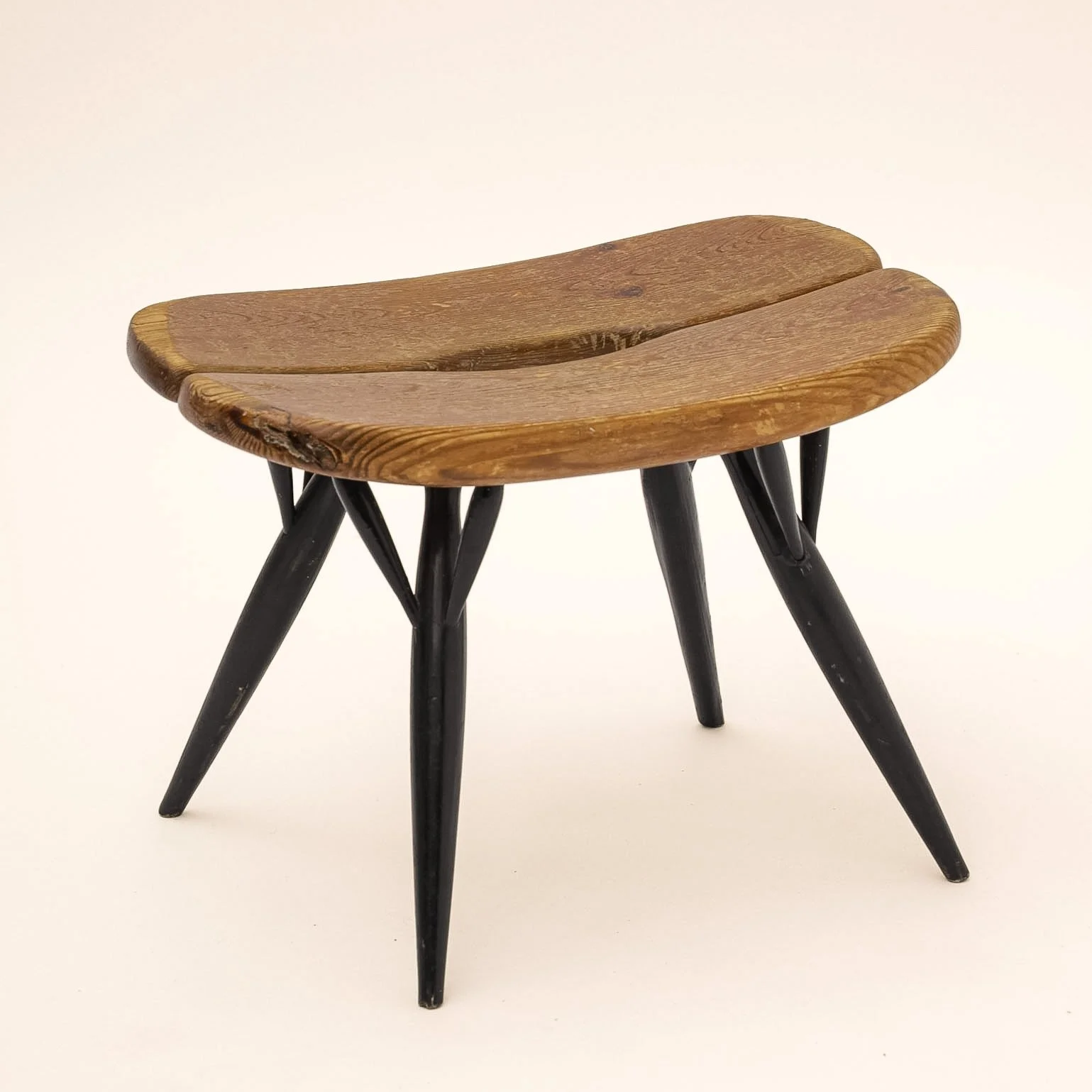
the first design in the pirkka range, the stool was created for use after the sauna. this is an early and rare low-seat model.
naturally worn surface, with signs of age and use throughout. legs seem to have been later repainted. original laukaan puu stamp to underside.
h 32 w 44 d 29cm
any questions or interest please get in touch.
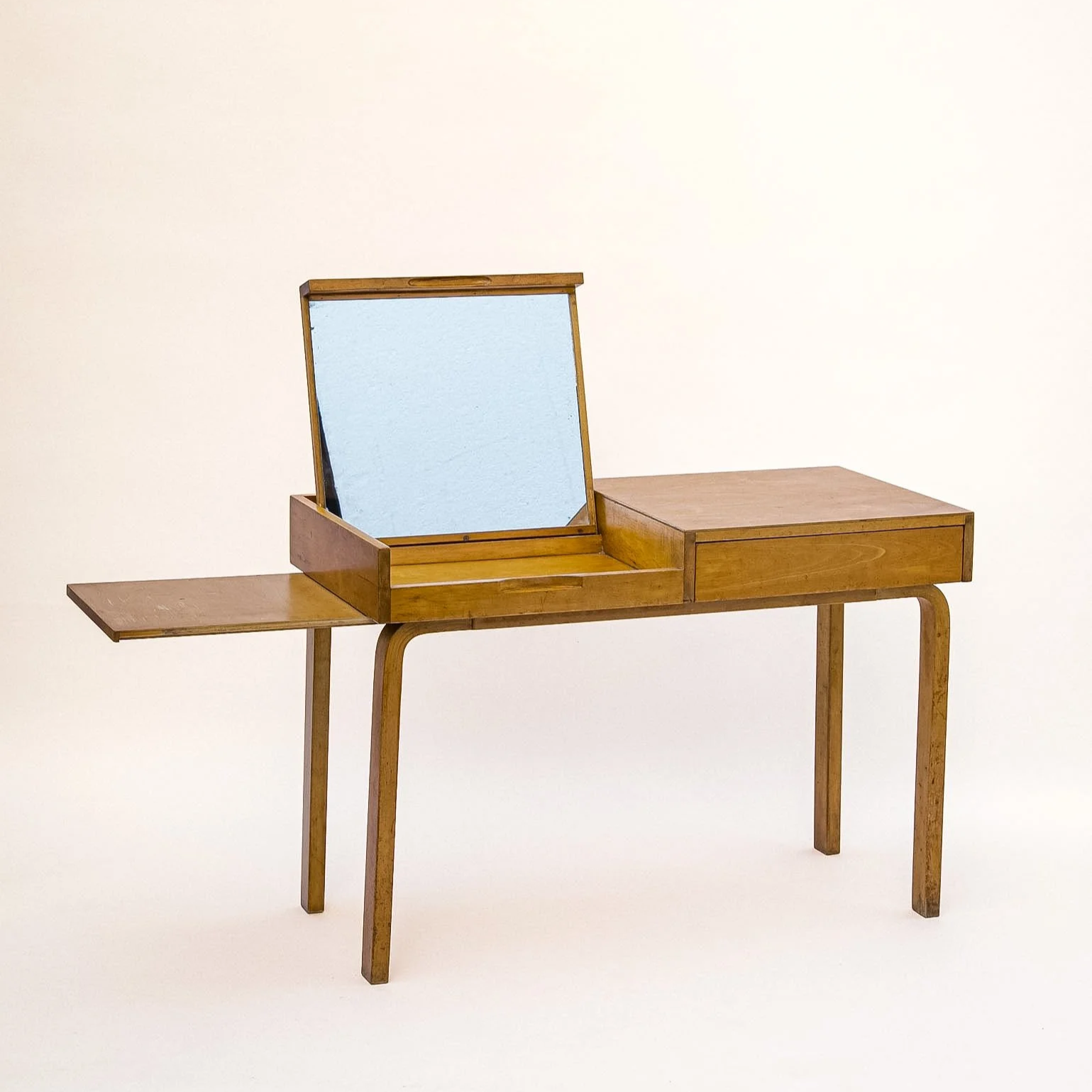
the model 191 vanity desk is a compact functionalist design, with the simple construction and practical proportions typical of early aalto furniture.
a rarely seen model, designed to work equally well as a dressing table or writing desk. it has a hinged mirror to the left, a drawer to the right, and a sliding extension beneath, supported on aalto’s bentwood legs.
nicely aged, with rich birch and a naturally worn surface that reflects its use. retains its original artek stamp to the underside.
h 72 w 106 d 50 cm
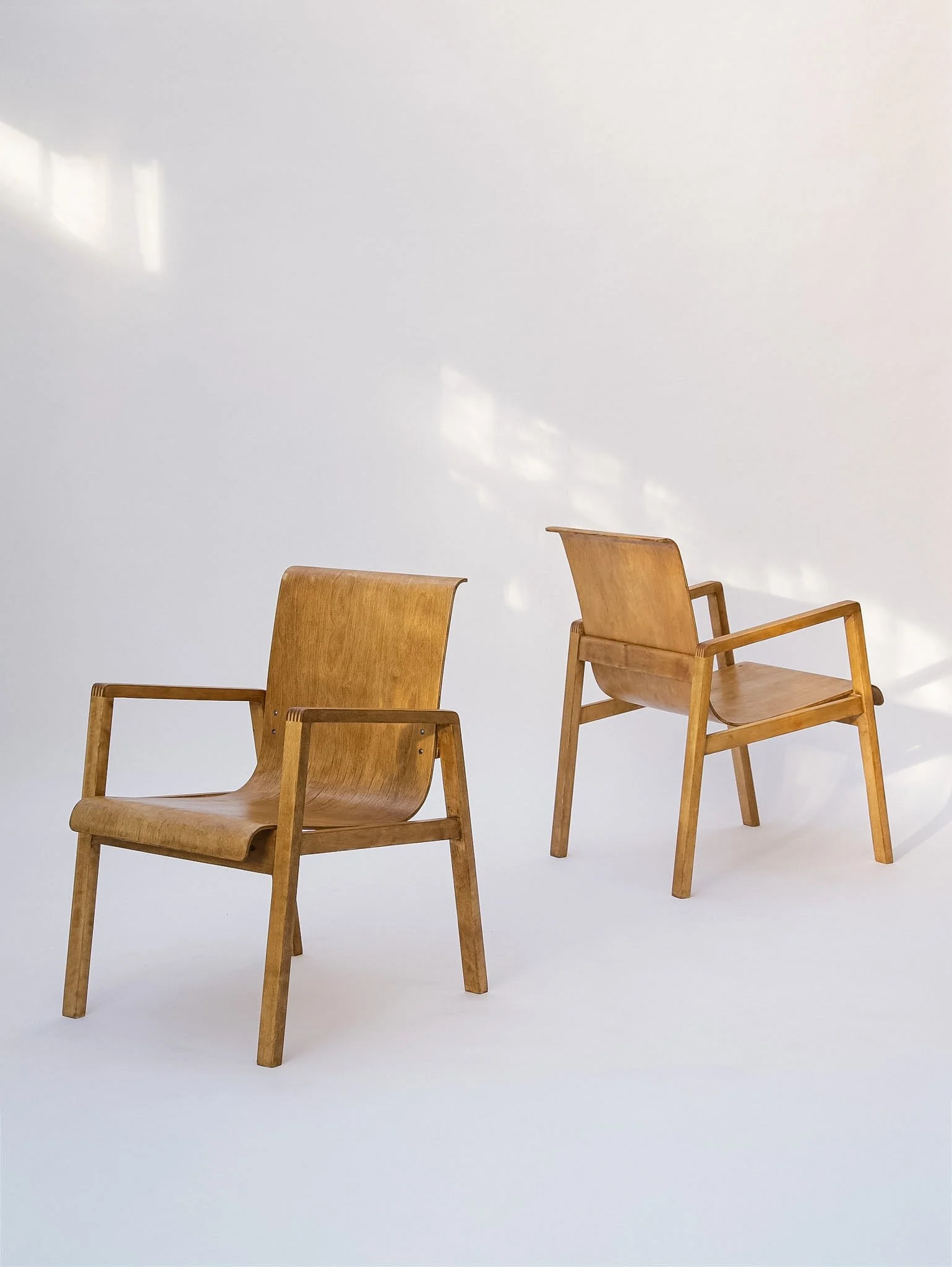
the model 403 chair was designed by alvar aalto for the hallways of the paimio sanatorium in 1932. made from bent birch plywood with solid birch armrests, the chairs are lightweight and stackable.
both chairs have a nice worn finish that reflects their age, with a rich colour and plenty of character. there is some evidence of earlier veneer cracking to the curved seat section of one chair, which appears to have been stabilised at some point. this does not affect strength or usability, and both chairs remain structurally sound and sturdy.
h 83 w 58 d 58 cm
the chairs can be sold separately.
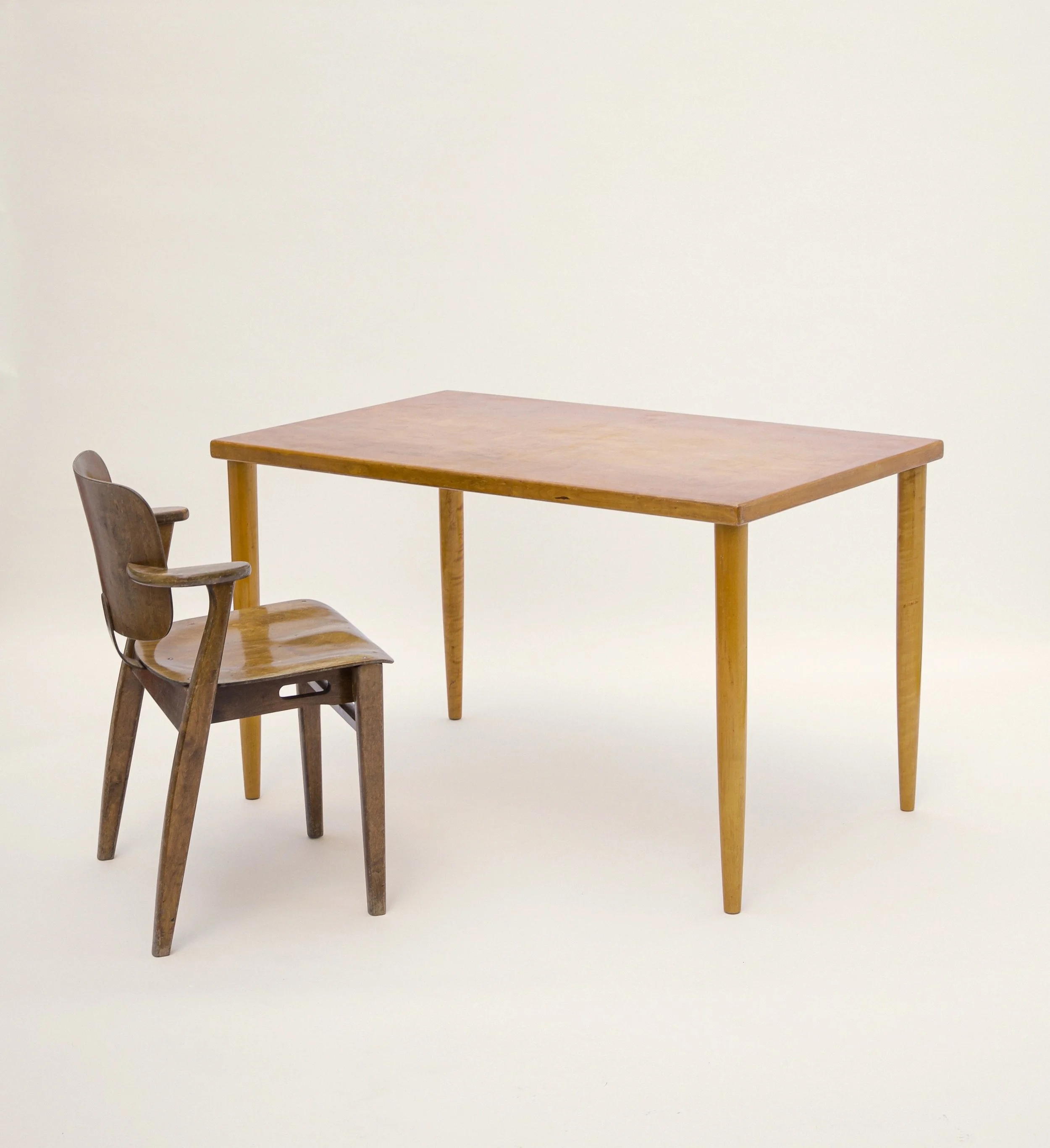
designed in 1946 for the domus academica student housing complex in helsinki. the domus table is a particularly good example of post-war finnish design, with a simple rectangular top and slender, tapering legs that screw directly into the frame.
the domus chair is the more widely recognised design from the series, while the table was produced in relatively small numbers for student dormitories and contract use, and is now much less commonly seen.
this one has a lovely golden colour and a naturally worn surface, with signs of age and use throughout.
h 72 w 120 d 75cm
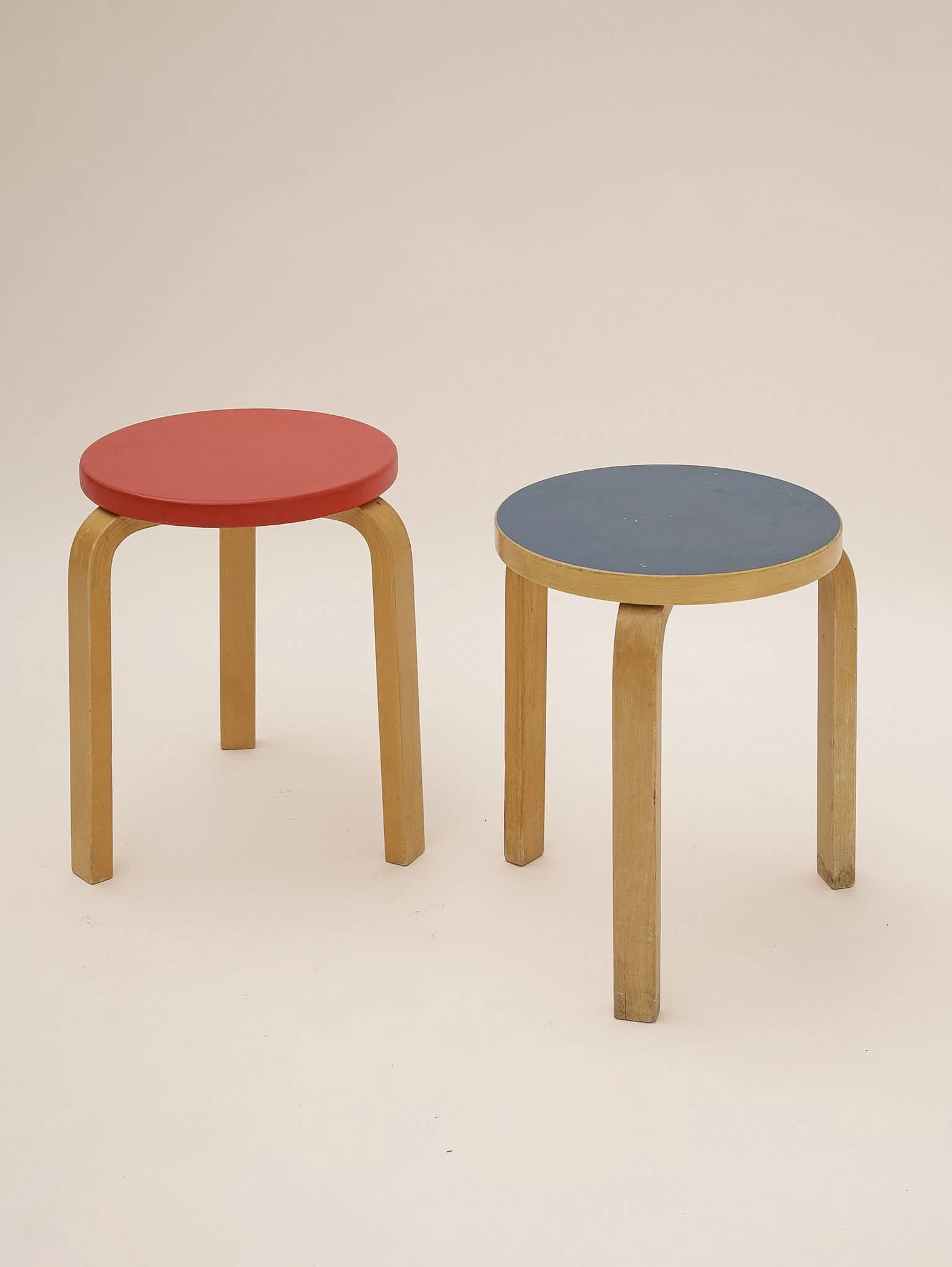
a pair of stools with blue linoleum and red vinyl seats, set on patinated birch legs.
both are well lived-in, solid and structurally sound, with wear consistent with age and use. screw holes on the underside suggest they may have been adapted from aalto 65 chair seats.
h 44 × dia. 38 cm
can be purchased separately too, get in touch.
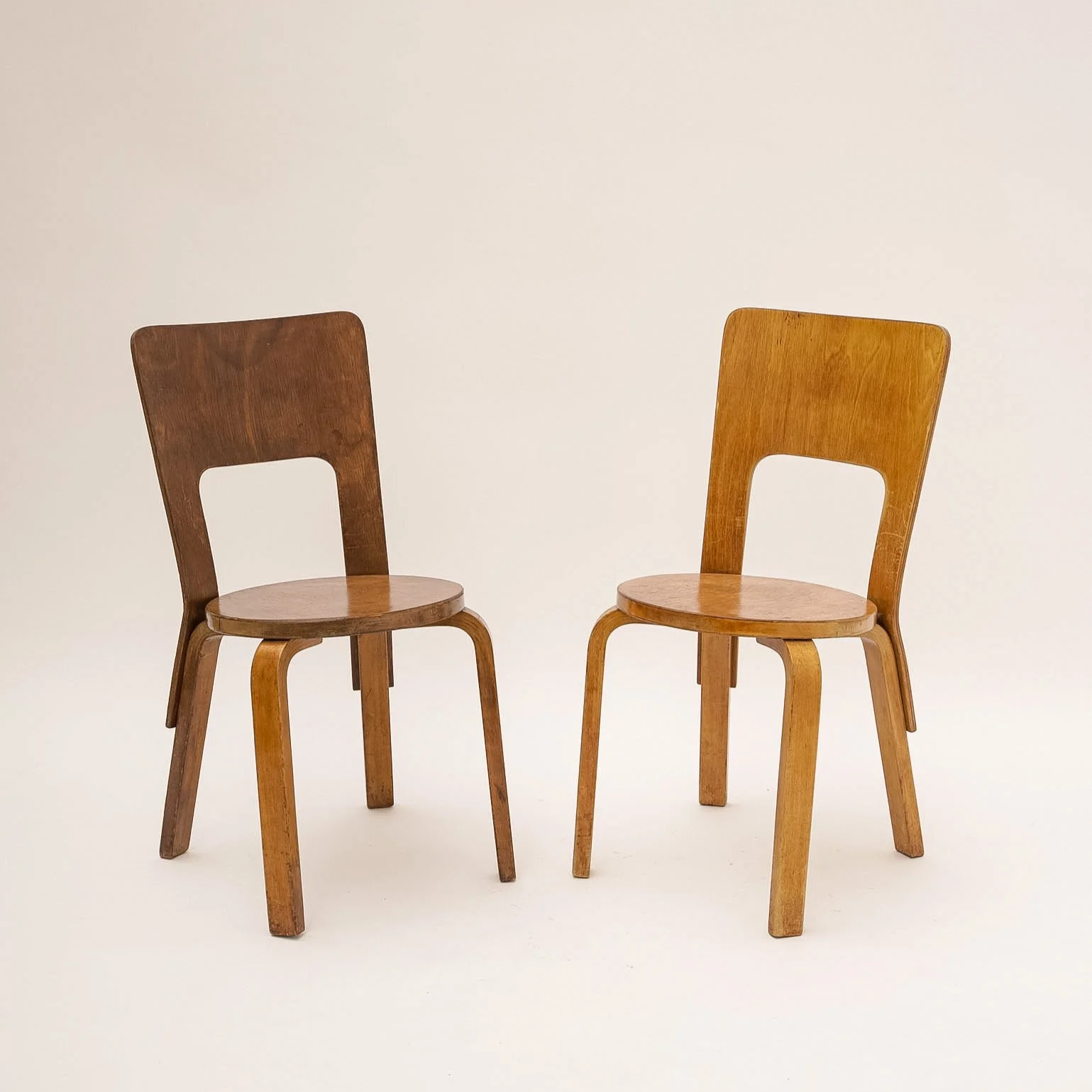
very early pair of 66 chairs that have aged well, with a rich colour and plenty of character. one chair retains its finmar plaque, while the other shows impressions where a plaque was once fitted.
note that the darker example has a backrest that extends further back than intended, due to the plywood having weakened over time.
h 78 w 39 d 42cm
chairs can be sold separately, any questions please get in touch.
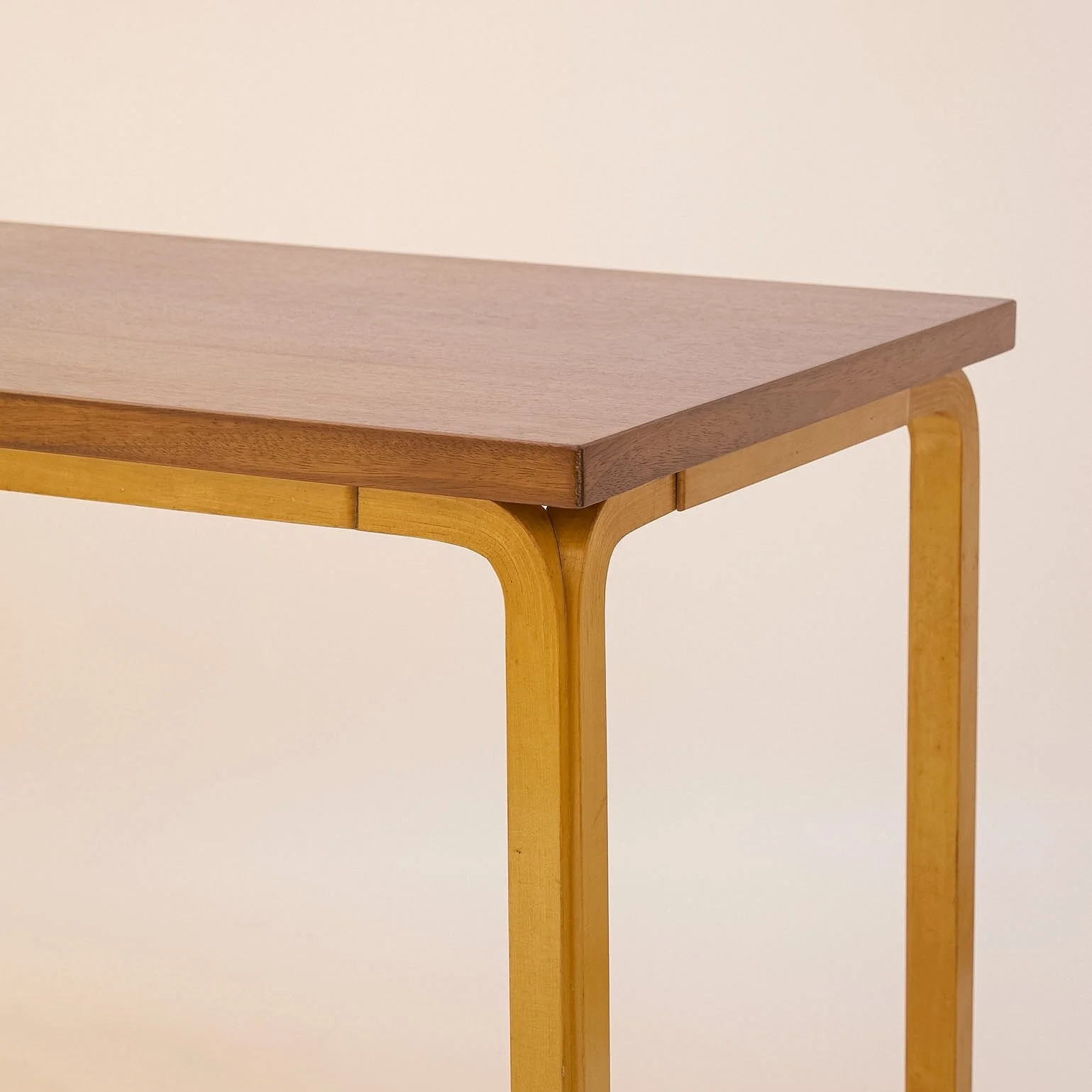
an evolution of the l-leg, the distinctive y-leg features two slender bent birch legs joined together, giving the table a sense of lightness.
paired here with a teak-veneered top - a material less commonly associated with aalto - creating a nice contrast between the dark wood and warm birch legs.
h 74 w 135 d 71cm

an early alvar aalto chest of drawers, model 296, crafted in birch and set on its original wooden castors, a practical piece with clean proportions.
features a locking mechanism that locks the lower drawers when the top drawer is closed.
the birch has developed a rich colour over the years, with wear consistent with age. a nice example that remains sturdy and ready for use.
wheels slightly stiff, key and one back shelf is missing.
h 66 w 38 x d 69cm
delivery can be arranged at an additional cost.
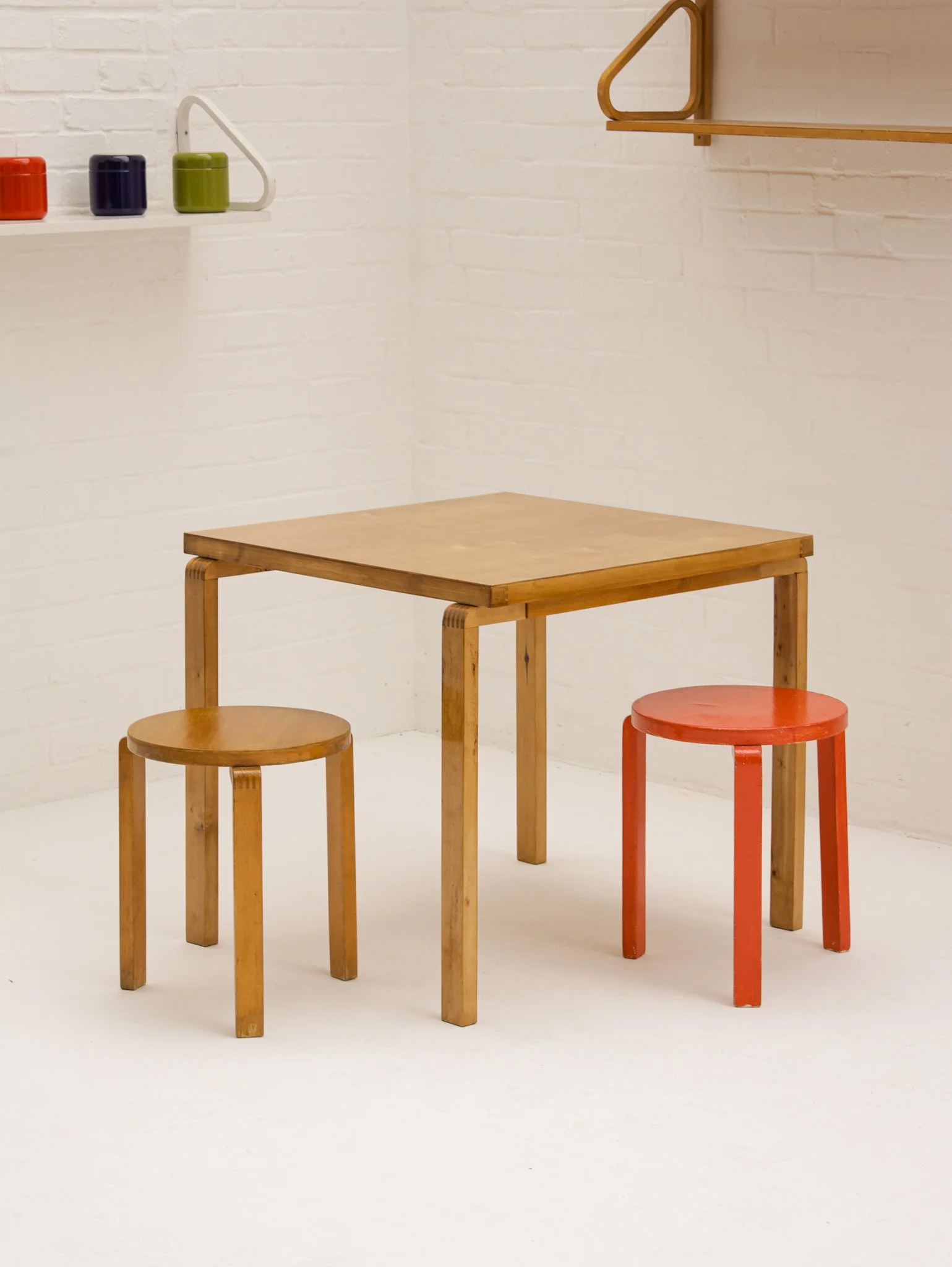
the ‘war-leg’ was developed as a variation of aalto’s bent-leg design during a period of material and labour shortages. most notably, glue in short supply meant the usual bentwood construction became difficult to produce, and instead the leg was made by joining two sections of birch at a right angle using interlocking finger joints.
the exposed finger-jointed construction is a distinctive feature of these wartime pieces and an interesting insight into the practical adaptations made by artek during the period.
nicely aged, with warm birch and a naturally worn surface that reflects its age and use.
h 70 w 75 d 75 cm
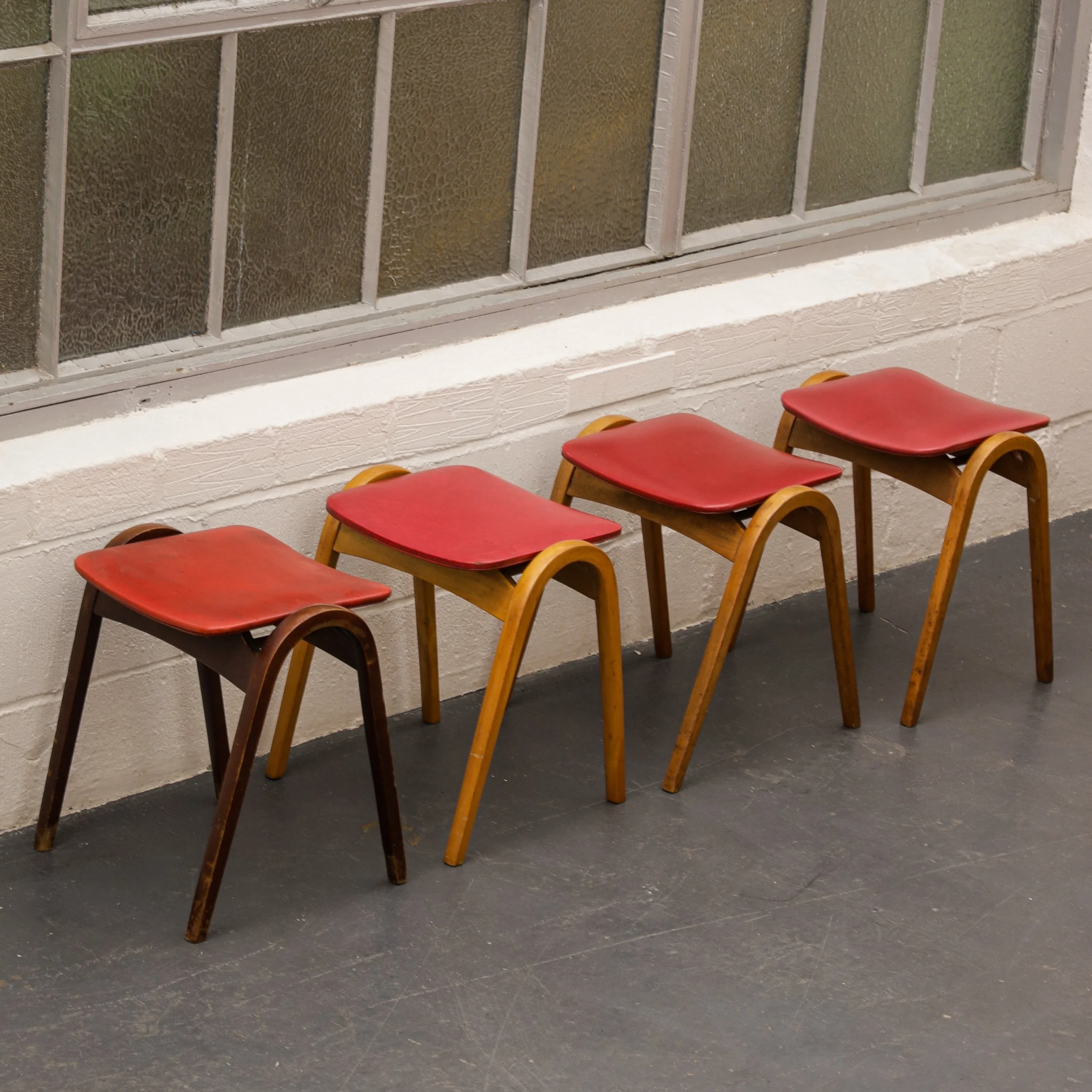
a leading figure in japanese industrial design, isamu kenmochi sought to bring traditional japanese craftsmanship into modern living. designed with the compact floor plans of postwar japanese apartments in mind, the stacking stool is a considered piece of functional design, with a practical form that reflects kenmochi’s approach to modernism.
this set has a nicely worn, characterful finish, with marks and signs of use throughout. two stools retain their akita mokko labels.
h 45 w 38 d 38cm